
No products in the cart.


Sale!
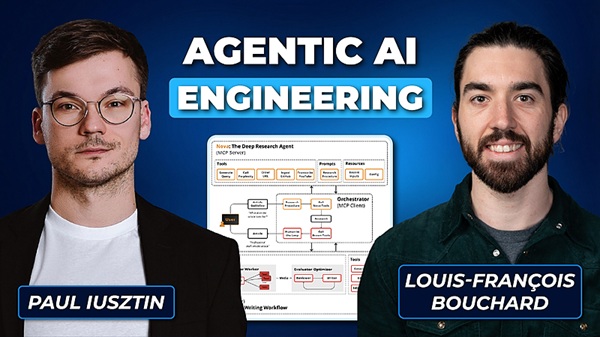
[Group Buy] Agentic AI Engineering by Paul Iusztin
$449.00 $79.00
- Payment method: I will send the payment link to your email.
- Deliver by: Google Drive, Mega.nz
Mastering Agentic AI Engineering-From PoC Purgatory to Scalable Systems
Agentic AI Engineering represents a pivotal shift in how we conceive, develop, and deploy artificial intelligence, moving beyond simple demonstrations to construct robust, reliable, and production-ready systems capable of autonomous action and sophisticated problem-solving. This novel discipline is essential for bridging the current chasm between flashy AI prototypes and the integrated solutions businesses critically need.
Table of Contents
Executive Summary
The rapid evolution of Large Language Models (LLMs) has undeniably reshaped the technological landscape, yet this meteoric rise has simultaneously unearthed a significant and pressing skills gap within the industry. While the foundational capabilities of LLMs for text generation are widely accessible and easily demonstrable through basic chat interfaces, the true challenge lies in transcending these initial proofs-of-concept (PoCs) to architect reliable, production-ready Agentic AI Engineering systems. The market is currently saturated with impressive, often dazzling, AI demos that, regrettably, fall short of the rigorous standards for reliability, persistent memory, and consistent task execution demanded by real-world enterprise applications and end-users. This disparity underscores a critical unmet need for specialized expertise in transforming raw model outputs into functional, dependable, and scalable AI products.
This burgeoning field highlights the emergence of the AI Engineer as a high-demand, indispensable role, specifically tasked with extricating projects from the dreaded “PoC purgatory” to construct sophisticated multi-agent systems. These systems are not merely standalone applications but are meticulously designed to integrate seamlessly into existing business infrastructures, augmenting human capabilities and automating complex workflows. Key insights reveal that LLMs alone are insufficient for executing real-world tasks; their utility is unlocked only through an engineered layer providing planning capabilities, sophisticated tool use, and robust memory management. The quintessential AI Engineer is a professional adept at end-to-end development, encompassing everything from meticulous data collection and preprocessing to system deployment and continuous monitoring. Architecturally, successful Agentic AI Engineering solutions are predicated on iterative planning loops, critical evaluation cycles, and intricate workflow orchestration, fundamentally differing from simplistic single API calls. The educational paradigm is consequently shifting, emphasizing practical application through the construction of complex, multi-agent systems—such as advanced deep research and writing agents—to cultivate and validate profound technical depth required for today’s intricate AI challenges.
The Current Landscape and Challenges in AI Development
The contemporary artificial intelligence landscape often presents a paradox: on one hand, we witness an explosion of breathtaking AI demonstrations and prototypes, frequently showcased through slick user interfaces or viral social media snippets that captivate the public imagination. These flashy demos, while exciting and indicative of future possibilities, often obscure a deeper, more pervasive reality: a gaping chasm between the superficial allure of an AI concept and the intrinsic robustness required for an actual, reliable production system. Many developers can skillfully conjure a basic LLM interaction, capable of generating text or answering simple queries, yet only a select few possess the specialized knowledge and comprehensive skill set to shepherd such a system from a rudimentary experiment to a fully operational, trustworthy solution that truly adds business value and withstands real-world stress. This discrepancy between perceived capability and practical deployment is a defining characteristic of the current AI epoch.
This problematic disparity has famously led to what industry practitioners refer to as “PoC Purgatory”—a frustrating state where promising proofs-of-concept languish indefinitely, unable to bridge the gap to full-scale production. The core issue stems from the inherent limitations of raw LLMs when isolated. While formidable in their text generation prowess, these models struggle inherently with core production requirements such as autonomous planning, consistent reliability across varied scenarios, and persistent contextual awareness over extended interactions. Without significant external engineering, they cannot remember long-term context or adapt dynamically to specific business constraints, leading to unpredictable and often unreliable outputs. The industry’s urgent demand is for a new breed of engineers—those equipped with the holistic understanding of not just how to call an LLM API, but how to encase it within a resilient, intelligent, and adaptable architectural framework. This new demand catalyzes the need for competent individuals who can elevate AI from mere novelty to indispensable operational infrastructure, thereby rescuing countless innovations from the perpetual limbo of “PoC Purgatory” and delivering them as fully-fledged, impactful solutions.
Understanding the Limitations of Raw LLMs
At their core, Large Language Models are advanced pattern-matching machines that primarily generate tokens – sequences of numbers and words – based on the vast datasets they were trained on. This fundamental mechanism means that, in their raw, unadorned state, LLMs are inherently text generators, not autonomous action executors. They can predict the next most probable word or phrase with remarkable accuracy, crafting coherent and contextually relevant prose, but they do not possess an intrinsic understanding of “action” in the real world. A raw model cannot independently decide to browse the internet, query a database, or manipulate an external tool; these are functionalities that must be meticulously engineered around the model. For instance, if you ask a bare LLM to “book me a flight,” it might generate a convincing dialogue about booking a flight, but it will never actually interface with an airline reservation system without explicit programming. This limitation often manifests as a significant hurdle in transforming conversational outputs into tangible business outcomes.

Furthermore, these powerful models, when used in isolation, exhibit critical shortcomings in reliability and contextual coherence essential for any production environment. They cannot autonomously plan complex multi-step tasks or reliably break down overarching goals into manageable sub-tasks without explicit direction and feedback loops. Their “memory” is typically limited to the current chat window or a small historical context, making them prone to “contextual blindness” over longer interactions or when operating within a dynamic business process. They struggle to recall past decisions, learn from previous interactions, or adapt their behavior to specific, evolving business rules and constraints. This is precisely why the experience of interacting with a raw LLM API differs vastly from using a polished product like ChatGPT or Claude Code. The difference is not in the underlying model’s raw power but entirely in the sophisticated engineering surrounding it – the planning mechanisms, external tool integrations, memory layers, and feedback loops that transform a simple text generator into a highly functional and usable product. It’s imperative for developers to remember that even powerful models may sometimes produce inaccurate information; as the cautionary note states, “NotebookLM có thể đưa ra thông tin không chính xác; hãy kiểm tra kỹ câu trả lời mà bạn nhận được,” emphasizing the critical need for verification and robust engineering to mitigate such risks in production systems.
Core Competencies of Agentic AI Engineering
The transition from a rudimentary model call to a complete, trustworthy Agentic AI Engineering solution necessitates a mastery of a specific and advanced suite of technical skills, moving far beyond mere prompt engineering into the intricate realms of system architecture and intelligent agent design. At the forefront of these competencies lies Orchestration, which involves the design and management of complex planning loops, critique cycles, and intricate workflow logic. An AI engineer capable of orchestration understands how to guide an agent through multi-stage tasks, defining decision points, inter-agent communication protocols, and mechanisms for self-correction and iterative refinement. This skill is paramount for building systems that can autonomously tackle complex, ambiguous problems by breaking them down into actionable steps, executing those steps, and critically evaluating their own progress and outputs, much like a project manager overseeing a sophisticated initiative.
Complementing orchestration are Memory & Context Management and Tool Integration. Memory and context management involves architecting robust systems that allow agents to remember past interactions, maintain long-term contextual awareness, and seamlessly integrate diverse data sources. This includes designing knowledge bases, vector stores, and retrieval-augmented generation (RAG) pipelines that provide agents with the persistent memory and accurate, up-to-date information necessary for informed decision-making and coherent, extended interactions. Tool Integration, on the other hand, is the ability to empower agents to use external APIs, gather information from the web, and interact with existing software ecosystems. This involves developing custom tools, defining their schemas, and teaching agents how and when to invoke these tools to perform actions in the real world—from sending emails and accessing CRM data to performing complex calculations or simulating scenarios. Finally, Reliability & Evaluation and Deployment form the bedrock of production-grade systems. Reliability and evaluation encompass developing sophisticated frameworks for continuous testing, monitoring performance, identifying failure modes, and ensuring the consistent, predictable behavior of agents under various conditions. This includes defining metrics, setting up logging, and creating automated testing pipelines. Deployment, the final critical stage, involves moving these carefully crafted systems from local development environments to scalable, secure, and production-ready infrastructures, ensuring high availability, fault tolerance, and efficient resource utilization. Mastering these interwoven competencies defines the modern Agentic AI Engineering professional, capable of delivering genuine business impact.
Educational Framework and Curriculum Development
The burgeoning demand for skilled professionals in Agentic AI Engineering has catalyzed a vital collaboration between leading educational organizations and industry luminaries, significantly shaping the specialized curricula required to train the next generation of AI engineers. This collective effort, exemplified by partnerships such as those between Towards AI and experts like Paul Iusztin, the distinguished author of the widely acclaimed LLM Engineer’s Handbook, has been instrumental in codifying the knowledge and practical skills necessary to produce truly professional AI engineering talent. These specialized courses, often marketed as an agentic ai course or even the complete agentic ai engineering course, signify a profound shift from theoretical AI concepts to hands-on, problem-solving methodologies. The focus is not merely on understanding how LLMs work, but critically, on how to engineer robust, scalable, and reliable systems around them, bridging the gap from conceptual understanding to practical, deployable solutions.
At the heart of this advanced educational framework is a deep emphasis on the end-to-end development lifecycle, recognizing that a production-ready AI system involves far more than just model invocation. Training meticulously covers the entire journey, beginning with fundamental aspects like strategic data collection and meticulous preprocessing, progressing through advanced techniques such as model fine-tuning and intricate system integration, and culminating in robust deployment strategies and continuous monitoring post-launch. This holistic approach ensures that graduates are not only proficient in core AI mechanics but also possess the comprehensive understanding of software engineering best practices, DevOps principles, and system reliability necessary for enterprise-grade applications. Furthermore, a crucial, often undervalued, component of this educational model is the integration of community. Access to private networks of experienced alumni, industry mentors, and instructor support is consistently cited as a critical success factor for students. This vibrant ecosystem provides invaluable guidance, fosters collaborative learning, and offers timely insights, allowing aspiring professionals to navigate the extraordinarily rapid and complex advancements within the dynamic realm of Agentic AI Engineering effectively, ensuring they remain at the cutting edge of industry practice.
The Multi-Agent Project Model as a Learning Paradigm
Central to mastering the intricate skills demanded by Agentic AI Engineering is an innovative and highly effective pedagogical approach: the Multi-Agent Project Model. This model transcends traditional theoretical learning by immersing students in the practical, end-to-end construction of a production-ready multi-agent system. A typical architectural blueprint for such a learning project often involves at least two primary, interconnected agents: a Research Agent and a Writing Agent. The Research Agent is meticulously designed and engineered to autonomously gather information from diverse sources, including the web, proprietary databases, and various APIs. Its core functionalities extend beyond simple data retrieval; it’s programmed to intelligently identify knowledge gaps, deconstruct complex research tasks into manageable sub-queries, synthesize disparate findings, and structure the gathered information into usable, coherent notes, effectively building a dynamic knowledge base.
Working in concert with the Research Agent, the Writing Agent represents a pinnacle of complex, multimodal Agentic AI Engineering. This agent is tasked with transforming the structured research notes provided by its counterpart into polished, high-quality content. Its engineering involves not only sophisticated text generation capabilities but also adherence to specific stylistic guidelines, formatting requirements, and target audience considerations. For instance, a writing agent might be engineered to produce academic papers, marketing copy, or technical documentation, adapting its tone and structure accordingly. This project-based learning paradigm extends far beyond mere theoretical exercises, compelling students to confront real-world challenges in inter-agent communication, error handling, context sharing, and iterative refinement. By building such complex, reliable multi-agent systems—whether simulating deep research assistants, automated content creators, or sophisticated decision support systems—students not only prove their technical depth but also cultivate invaluable practical intuition required to design, develop, and deploy a new generation of AI solutions that seamlessly integrate into and augment human workflows, ultimately simulating and automating intricate business processes with remarkable fidelity and efficiency.
Key Software Patterns and Infrastructure for Agentic Systems
Building truly robust and scalable Agentic AI Engineering systems necessitates a profound understanding and application of foundational software patterns and infrastructure principles, which serve as the architectural backbone of any high-performing AI solution. The emphasis here shifts from merely orchestrating prompt chains to designing resilient systems that can withstand the demands of production environments. Core to this is a focus on robust infrastructure patterns such as sophisticated workflow orchestration engines, which manage the flow of tasks between agents, handle failures gracefully, and ensure consistent execution. Modular design is paramount, allowing individual agents or tool integrations to be developed, tested, and deployed independently, facilitating easier maintenance, upgrades, and fostering true reusability. Fault tolerance mechanisms, including retry logic, circuit breakers, and comprehensive error handling strategies, are critical to ensure that system failures in one component do not cascade and compromise the entire operation, thereby maintaining high availability and reliability.
Furthermore, the longevity and adaptability of Agentic AI Engineering solutions depend heavily on the strategic selection and implementation of modern tools and frameworks. While AI coding tools evolve at a dizzying pace, the underlying infrastructure systems and patterns tend to be more enduring. This includes leveraging cloud-native architectures for scalability, containerization (e.g., Docker, Kubernetes) for consistent deployment environments, and robust message queuing systems (e.g., Kafka, RabbitMQ) for asynchronous communication between agents and services. Security is not an afterthought but an integral part of the design, requiring secure API key management, access control mechanisms, and data encryption. Strategies for continuous integration and continuous deployment (CI/CD) are essential to enable rapid iteration, automated testing, and seamless updates to agentic systems. By grounding development in these proven software patterns and infrastructural best practices, AI engineers can ensure that their agentic solutions are not only functional but also scalable, secure, maintainable, and adaptable to future technological advancements, thereby transforming experimental prototypes into stable, enterprise-grade applications.
Industry Demand, Professional Outlook, and Future Trends
The current technological landscape is characterized by an undeniable and rapidly widening chasm between the aspiration for AI-driven automation and the practical capability to deliver it. At the heart of this challenge lies a critical shortage of engineers possessing the specialized skills required to build sophisticated Agentic AI Engineering systems—those intelligent entities that can autonomously plan, skillfully utilize external tools, maintain contextual awareness, and operate dependably within complex business operations. This deficit in human capital is not merely a statistical anomaly but a significant bottleneck impeding the widespread adoption and successful integration of advanced AI solutions across diverse industries. Companies across the globe, from budding startups to multinational corporations, are actively seeking to harness the transformative power of AI, and virtually every one of them requires a pipeline of developers who can translate abstract model calls into fully integrated, functional solutions that drive tangible business value.
Consequently, the role of the AI Engineer is rapidly evolving beyond that of a mere data scientist or machine learning practitioner; it is solidifying its position as a paramount leader in the next generation of product development. These professionals are uniquely positioned at the critical nexus, expertly bridging the conceptual gap between theoretical AI research and the rigorous demands of modern software engineering best practices. They are the architects who transform raw algorithmic potential into operational reality, designing the intricate systems that allow AI to move from experimental curiosity to indispensable business asset. For those aspiring to enter or advance within this field, traditional academic credentials, while valuable, are increasingly being complemented, and sometimes superseded, by practical intuition and demonstrable technical depth. The ability to showcase deployable portfolio projects—real-world agentic systems that exhibit planning, tool use, and reliability—is swiftly becoming the gold standard for hiring in this highly specialized and competitive niche. Looking forward, the demand for Agentic AI Engineering expertise is only projected to intensify, solidifying the AI engineer’s role as a linchpin in driving enterprise innovation and automation for decades to come, demanding continuous learning and adaptation to ever-evolving technological paradigms.
Perspectives from Experts and Industry Leaders
The discourse surrounding Agentic AI Engineering is significantly enriched by the profound insights and candid observations from leading experts actively shaping the field. Paul Iusztin, a respected authority and the author of the influential LLM Engineer’s Handbook, offers a particularly incisive perspective that underpins the entire premise of this emerging discipline. He unequivocally states, “The truth is that even the most powerful models cannot perform real world tasks on their own. . . Everything that makes them useful in actual products must be engineered around them.” This statement is not merely a technical observation; it is a fundamental clarion call for pragmatism in AI development. It elegantly encapsulates the core challenge and opportunity: the immense generative capabilities of LLMs are a raw material, a potent but unrefined resource. Their true utility, their ability to execute tangible actions and deliver consistent value in a production setting, is entirely contingent upon the sophisticated engineering layers that encapsulate them – the intricate planning, memory, tool integration, and orchestration mechanisms that define Agentic AI Engineering.
Echoing this sentiment, Louis-François Bouchard of Towards AI, another prominent voice in the AI community, vividly illustrates the chasm between initial prototypes and production systems. He highlights the monumental leap involved: “The jump from look it replied to a production system that can plan use tools remember context and actually ship something. . . is the exact skill set companies can find and the exact skill set this course teaches.” This quote underscores the profound practical difference between a rudimentary “hello world” LLM demo and a genuinely operational, enterprise-grade AI solution. It spotlights not just the existence of the skills gap but also the targeted educational efforts, such as the specialized agentic ai course offered in collaboration with experts like Paul Iusztin, that are specifically designed to imbue professionals with these critically needed competencies. Both experts emphasize that successful transition into this field demands more than just familiarity with AI models; it requires a deep understanding of system design, robust implementation skills, and a practical intuition for transforming theoretical possibilities into reliable, real-world applications. Their collective perspective serves as a powerful validation of the disciplined, engineering-first approach that defines the future of AI development.
Conclusion
The journey from rudimentary Large Language Model prototypes to resilient, production-ready Agentic AI Engineering systems represents the most significant challenge and opportunity in contemporary AI development. The limitations of raw LLMs—their inability to autonomously plan, reliably execute tasks, or maintain persistent context—underscore the critical necessity for a disciplined, engineering-focused approach. This new paradigm emphasizes core competencies such as robust orchestration, sophisticated memory and context management, seamless tool integration, rigorous reliability and evaluation frameworks, and strategic deployment methodologies. Educational initiatives, often guided by experts like Paul Iusztin and structured around the multi-agent project model, are increasingly vital in equipping professionals with these end-to-end development skills through comprehensive curricula like the complete agentic ai engineering course. The burgeoning industry demand for engineers capable of building these autonomous, multi-agent AI systems confirms that the AI engineer is not just a passing trend but a pivotal role leading the next generation of product development. By embracing specialized education, engaging in practical projects that demonstrate technical depth, and fostering community integration, aspiring AI engineers can effectively bridge the gap from experimental concepts to impactful, scalable enterprise AI solutions, fundamentally shaping the future of automation and intelligent systems.
Sales Page:_https://academy.towardsai.net/courses/agent-engineering
Delivery time: 12 -24hrs after paid
Be the first to review “[Group Buy] Agentic AI Engineering by Paul Iusztin”
Related products
Sale!

Sale!

Sale!

Sale!


Sale!


$25.00
Sale!

Reviews
There are no reviews yet.