
No products in the cart.


Sale!
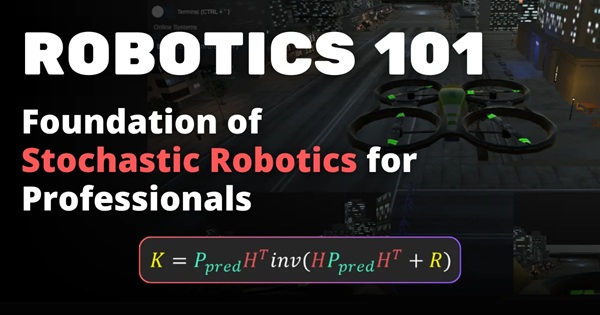
[GroupBuy] Master the First Principles of Robotics – Robotics 101
$249.00 $52.00
- Payment method: I will send the payment link to your email.
- Deliver by: Google Drive, Mega.nz
To truly Master the First Principles of Robotics is to transcend the superficial, moving beyond mere integration to a profound understanding that empowers engineers to design, build, and troubleshoot complex autonomous systems from the ground up, embracing the deep engineering needed for true innovation.
Master the First Principles of Robotics

The journey into advanced robotics often presents a fork in the road, one path leading towards convenience and quick assembly, the other demanding a rigorous commitment to fundamental understanding. This curriculum, dedicated to helping engineers Master the First Principles of Robotics, deliberately steers away from the alluring shortcuts of pre-built libraries and plug-and-play kits. Instead, it champions a philosophy rooted in deep engineering, advocating for a holistic grasp of systems from first principles.
This approach ensures that practitioners are not merely assembling components but are architecting intelligent machines, capable of critical self-correction and adaptation through a profound understanding of the underlying mathematics and physics that govern their existence. It’s a challenging but ultimately more rewarding path, transforming individuals from mere users of technology into its creators and masters, fostering an indispensable skill set in an increasingly complex automated world.
The Engineer’s Mindset – Beyond Plug-and-Play
The robotics field grapples with a fundamental schism, clearly articulating the divide between an “Integrator” with a “Consumer Mindset” and an “Engineer” or “Architect” who embodies a “System Architect Mindset.” This distinction is not merely semantic; it dictates an engineer’s capacity to innovate, diagnose, and resolve issues when confronted with the inevitable complexities of real-world autonomous systems.The Integrator, often accustomed to cloning repositories, diligently following tutorials, and installing pre-built packages with commands like sudo app install, functions primarily as a wrapper engineer.
Their expertise lies in gluing together existing software libraries, creating functional systems by leveraging the work of others. While this approach can yield quick results in stable environments, it fosters a dependency that leaves them vulnerable and often stalled by unforeseen challenges such as novel hardware configurations or unexpected sensor failures, waiting for generic community updates or the elusive resolution of a GitHub issue. This reactive stance views code as nothing more than software, treating intricate algorithms as impenetrable black boxes, limiting their ability to truly manipulate or comprehend the system’s core behaviors.
In stark contrast, the Engineer, or Architect, operates from a position of profound understanding and proactive control. Their methodology involves building essential components like drivers, controllers, and state estimators entirely from scratch, a process that imbues them with unique autonomy and insight. For these engineers, sensor integration is not a rote coding task but a sophisticated challenge in coordinate frame transformation, demanding a mastery of geometric and kinematic principles. They possess the mathematical sovereignty to adjust underlying models manually, allowing them to precisely account for changes in physical configurations, ensuring system robustness regardless of external alterations.
This perspective elevates code beyond mere software; they perceive it as “physics in digital form.” This deep-seated understanding means that when faced with a problem, their instinct is not to search for a new library or patch with an if statement, but to analyze the mathematical model that governs the system’s behavior. They leverage advanced tools like AI not as a substitute for logic or understanding, but as a powerful amplifier to execute a specific, well-defined vision, streamlining complex tasks rather than relying on AI as a crutch for foundational knowledge.
The critical implication of this mindset divergence manifests most starkly in the response to system failure. An Integrator, encountering a malfunction, is likely to embark on a troubleshooting path that involves checking API documentation, searching forums for similar issues, or rolling back to a previous, presumably working, version of a library. Their focus is external, relying heavily on the integrity and documentation of third-party components.
An Architect, however, views failure as an internal diagnostic challenge, an opportunity to refine the core mathematical models governing the system. They might delve into sensor calibration data, re-evaluate control loop gains, or recalibrate their state estimators, using their deep understanding of control theory, sensor fusion, and raw physics to pinpoint and rectify the root cause. This intrinsic capability to command how a machine perceives and interacts with reality, without external dependencies, is the hallmark of true engineering mastery, a level of authority that defines the “System Architect.”
The Four Absolute Rules of Deep Engineering
The program designed to cultivate these Architects is not merely a collection of advanced topics; it is governed by a set of incredibly stringent, foundational principles encapsulated in four “Absolute Rules.” These rules are meticulously crafted to ensure that every participant develops a deep technical authority, moving beyond superficial knowledge to a profound, intuitive understanding of robotics. The first and arguably most crucial rule is “First Principles First”: a strict prohibition on the use of black boxes until they are thoroughly and deeply understood.
This means that every algorithm, every control law, and every sensor fusion technique must be derived from scratch. Before a single line of implementation code is written, the underlying mathematical theory is explored, understood, and validated. This rigorous process strips away the mystery, transforming daunting concepts into transparent, controllable elements, fostering an unshakable confidence in the system’s behavior and performance. It ensures that engineers comprehend the “why” behind every “how,” building a robust mental framework that can adapt to any new challenge.
The second absolute rule, “Math Over Heuristics,” underscores the program’s unwavering commitment to scientific rigor. In this methodology, system behavior is never “patched” with arbitrary if statements or quick-fix workarounds. When a system exhibits undesirable behavior or fails, the solution isn’t found in empirical tweaks but in a precise analytical refinement of the underlying mathematical models. This involves meticulously adjusting cost functions, refining gain matrices within control loops, or fundamentally revising the system models themselves.
This systematic, math-driven approach guarantees that solutions are robust, predictable, and scalable, avoiding the fragility inherent in systems bloated with conditional logic. It cultivates an engineer who instinctively seeks to understand the quantitative relationships governing the system, ensuring that any modification is purposeful and mathematically justified, rather than a speculative guess. It’s about designing intelligence through elegant equations, not by layering on brittle fixes.
Central to the entire ethos is the third rule: “The Math -> Code -> Reality Loop.” This is unequivocally identified as the only valid learning cycle within the curriculum, a continuous feedback process that solidifies understanding and builds practical competence. The cycle commences with an equation – a mathematical formalism representing a physical phenomenon or control strategy. This equation is then precisely translated into code, ensuring a direct and accurate computational representation. Finally, and crucially, this code is deployed, either to sophisticated hardware or to virtual robotic simulations, where its behavior in “reality” can be observed, validated, and refined.
This iterative loop illuminates discrepancies between theory and practice, forcing engineers to reconcile their mathematical models with empirical observations. It is through this direct engagement with the physical world that abstractions become concrete realities, reinforcing the deep understanding gained from first principles and mathematical derivation. Each iteration within this loop refines both the engineer’s theoretical grasp and their practical implementation skills, building a bridge between abstract mathematics and tangible robotic performance.
The fourth and final absolute rule, “No Shortcuts,” serves as a testament to the curriculum’s uncompromising pursuit of mastery. This program explicitly avoids the allure of easy libraries, high-level abstractions, and pervasive frameworks like ROS (Robot Operating System). The deliberate omission of these conveniences ensures that engineers are compelled to comprehend every detail, from the lowest-level transistor interactions affecting sensor data acquisition to the highest-level trajectory planning algorithms. By denying the crutch of pre-packaged solutions, participants are forced to build components themselves, developing an intimate knowledge of system architecture, data flow, and control mechanisms. This meticulous, hands-on approach guarantees that nothing remains a black box.
The result is an engineer who possesses an unparalleled depth of understanding, capable of troubleshooting, enhancing, and innovating truly autonomous systems without being constrained by the limitations or specific paradigms of external frameworks. This deep, unmediated engagement with the core engineering challenges is what differentiates a true architect from a mere system assembler.
Robotics 101
Robotics 101 represents a meticulously structured curriculum engineered to elevate aspiring robotics professionals from a foundational understanding to a mastery of autonomous system design. This program is not just about learning concepts; it’s about fundamentally shifting an engineer’s perspective, empowering them to become “One-Man R&D Departments” or “System Architects” capable of building complex robotic systems entirely from scratch. The core philosophy of Robotics 101 dictates a complete rejection of black box libraries and plug-and-play kits, insisting instead on a deep dive into engineering from first principles.
By intensely focusing on the intricate intersection of Control Theory, Sensor Fusion, and raw physics, the curriculum instills a rigorous “Math -> Code -> Reality” learning loop. Key technical pillars such as the Kalman Filter, State-Space Method, and Rotation Matrices are not just taught; they are derived, implemented, and applied, ensuring that graduates possess the unparalleled ability to build autonomous drones and ground vehicles without any reliance on external frameworks like ROS.
Curriculum Foundations – Bridging Math to Reality
The very foundation of the Robotics 101 curriculum is built upon a premise that true mastery in robotics necessitates a robust command of underpinning mathematical and programming concepts. It acknowledges that before one can design a sophisticated autonomous system, they must first be fluent in the languages that describe its behavior and enable its realization. The program requires specific prerequisites, ensuring that engineers possess the necessary intellectual toolkit to rigorously engage with the advanced topics presented.
These foundational requirements are not arbitrary benchmarks but are carefully selected to provide the intellectual bedrock upon which the principles of control theory, sensor fusion, and physics can be effectively built. Without a solid grasp of these essentials, the intricate details of state estimation or optimal control would remain obscure, hindering the transition from a consumer mindset to that of a true architect. The curriculum therefore builds a bridge between abstract mathematical formalisms and their tangible manifestations in robotic systems.
To embark on this transformative journey, prospective students must demonstrate proficiency across several critical domains. These include:
- Programming: Python basics (classes, functions, arrays)
- Calculus: Derivatives and Integrals
- Linear Algebra: Matrix and vector multiplication
- Advanced Math: Differential equations, Statistics (Mean, Variance, Gaussian Distribution)
Beyond these individual prerequisites, the Robotics 101 curriculum itself is structured into progressively complex levels, commencing with fundamental mathematical refreshers and culminating in advanced sensor fusion and control theory. This phased approach ensures that knowledge is built block by block, reinforcing earlier concepts as new ones are introduced. The core technical pillars – the Kalman Filter, the State-Space Method, and Rotation Matrices – are not merely theoretical constructs within this program.
Instead, they are introduced early and iterated upon, serving as recurring themes that exemplify the program’s commitment to deep understanding. For instance, Rotation Matrices are employed both in understanding sensor orientation (as seen in the realignment example) and in developing advanced attitude control. These pillars are presented not as isolated tools but as interconnected elements of a unified mathematical framework for perceiving, controlling, and interacting with the physical world, solidifying the engineer’s capability to orchestrate complex robotic behaviors.
The ultimate objective of integrating these prerequisites with a structured, pillar-centric curriculum is to cultivate engineers who possess not just theoretical knowledge but also the practical acumen to apply it effectively. By requiring a strong mathematical background and then systematically building upon it through hands-on implementation, Robotics 101 ensures that every graduate is equipped to face real-world challenges with confidence.
The program’s insistence on understanding fundamental concepts before leveraging advanced tools means that when a sensor’s data misaligns, the engineer instinctively reaches for a Rotation Matrix to transform coordinate frames rather than troubleshooting a software driver. This ability to command the machine’s perception of reality through mathematical manipulation is a direct consequence of the rigorous, first-principles-driven approach, preparing individuals not just for existing roles but for pioneering the future of autonomous technology.
Navigating the Technical Levels – From Navigating the Technical Levels – From Basics to Advanced Applications
As students progress through Robotics 101, they encounter a carefully designed pathway that gradually leads them from fundamental principles to advanced applications in robotics. This tiered approach is not merely helpful; it is essential for fostering deep understanding and proficiency across various domains of robotics. Each level builds upon the previous one, ensuring that learners can confidently tackle increasingly complex topics without getting overwhelmed.
The journey begins with foundational mathematics and programming skills, where students are introduced to basic algorithms, data structures, and functions. These early lessons are crucial as they lay the groundwork for more sophisticated concepts. For example, through hands-on projects, students may find themselves implementing simple robotic controls using basic motion commands. As they navigate this initial phase, they gain confidence in their ability to manipulate data and write code that directly interacts with hardware components. This is the moment when abstract theories of calculus and linear algebra begin to come alive, providing real-time feedback and tangible experiences.
Once students have mastered the basics, they transition into exploring key areas such as control theory and sensor integration. Here, they delve deeper into concepts like PID (Proportional-Integral-Derivative) controllers, which allow for fine-tuned control over robotic movements. They learn how to capture sensor data and apply filtering techniques, such as Kalman filters, to smooth out noise and improve accuracy in state estimation. This middle tier of Robotics 101 emphasizes not just theoretical knowledge but also practical implementation, encouraging experimentation and innovation. Students might work on projects involving the autonomous navigation of robots through obstacle courses, allowing them to test their understanding of sensor fusion and control strategies in real-world scenarios.
As they reach the upper echelons of the curriculum, learners engage with cutting-edge technologies and complex systems. This stage includes developing algorithms for multi-robot coordination or designing systems capable of adapting to dynamic environments. It often involves collaborative projects that simulate real-world challenges, pushing students to integrate their diverse skill sets while functioning as a cohesive unit. At this level, the curriculum ensures that every student develops a unique perspective on robotics, emphasizing the importance of interdisciplinary approaches to solve intricate problems.
By embracing this structured progression from basic concepts to advanced applications, Robotics 101 prepares students not merely to enter the workforce but to become leaders in the field of robotics. The cumulative knowledge gained at each level enhances their ability to innovate and adapt, transcending traditional boundaries of robotic design and operation. As engineers proficient in both theory and practice, they emerge ready to harness their skills to create transformative solutions for the future.
Real-World Applications – Engineering Tomorrow’s Robotics
While theoretical knowledge is paramount in Robotics 101, the ultimate goal is to translate that knowledge into real-world applications. The curriculum is designed to highlight how foundational principles can be utilized to tackle pressing challenges in various sectors. From healthcare to agriculture, autonomous systems are poised to revolutionize our world, and graduates of this program will be equipped to lead the charge.
One exciting area where robotics is making strides is in healthcare. Imagine surgical robots that assist surgeons with precision and dexterity far beyond human capabilities. Through the Robotics 101 curriculum, students are trained to think critically about the integration of robotics in medical procedures. They explore how sensors can be utilized for real-time monitoring of patients’ vital signs and how these systems can autonomously adjust treatment protocols based on collected data. Such innovations are underpinned by a deep understanding of control theory and sensor fusion, solidifying the connection between academic training and practical application.
Another significant application lies in the agricultural industry, where robotics is being embraced to optimize farming practices. Autonomous drones can survey vast fields, collecting data on crop health and soil conditions. With a grounding in the principles of physics, students learn how to design algorithms that enable these drones to navigate complex terrains while executing tasks such as targeted pesticide application or seed planting. By marrying their theoretical insights with hands-on experience, graduates can develop innovative solutions that address food security challenges and increase sustainability.
Beyond these examples, the potential applications of robotics span numerous industries, including transportation, manufacturing, and even space exploration. The emphasis on mastering first principles allows engineers to adapt their knowledge to any sector, no matter how specialized or niche. By cultivating an environment where creativity and analytical thinking thrive, Robotics 101 empowers students to envision and engineer the future of robotics in ways that are truly groundbreaking.
Conclusion
In summary, Mastering the First Principles of Robotics through Robotics 101 provides aspiring engineers with a comprehensive and transformative educational experience. The curriculum’s commitment to building a strong mathematical foundation, coupled with its structured progression from basic to advanced topics, equips graduates with the skills necessary to innovate and lead in diverse real-world applications. By rejecting black box solutions and emphasizing hands-on learning, this program nurtures a generation of engineers who possess both theoretical understanding and practical expertise, preparing them to tackle the complexities of tomorrow’s robotic challenges with confidence and creativity.
Sales Page:_https://www.ubicoders.com/foundations/robotics/robotics101
Delivery time: 12 -24hrs after paid
Be the first to review “[GroupBuy] Master the First Principles of Robotics – Robotics 101”
Related products


$25.00
Sale!


$25.99

$59.00

Marketing
$19.00

$99.00

$19.00
Reviews
There are no reviews yet.