
No products in the cart.


Sale!
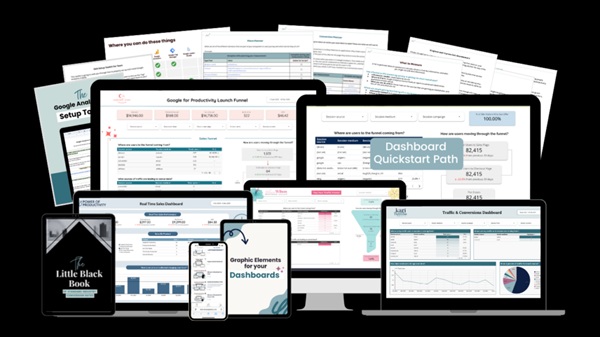
Measure and Maximize – Kari Poppleton
$997.00 $25.00
- Payment method: I will send the payment link to your email.
- Deliver by: Google Drive, Mega.nz
The Measure and Maximize framework is a revolutionary approach designed to transform how businesses operate, shifting from reactive, intuition-driven decisions to proactive, data-informed strategies. It provides a structured system for building automated dashboards, enabling business owners to transition from guesswork to high-confidence decision-making, ultimately aiming to maximize profit and efficiency by identifying and scaling what truly works while eliminating wasted effort.
Table of Contents
Measure and Maximize
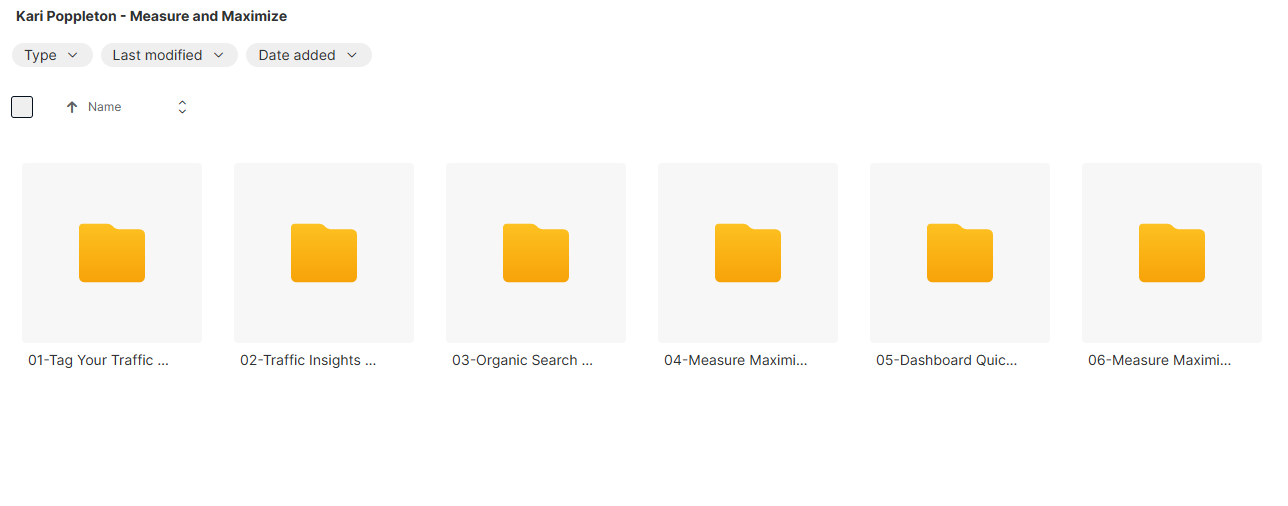
The Measure and Maximize framework stands as a direct counterpoint to the prevalent, yet often inefficient, practice of running a business based on gut instinct. Far too many entrepreneurs experience what feels like fluke success, unable to pinpoint the exact activities—be it content, advertising campaigns, or sales funnels—that genuinely move the needle. This lack of empirical understanding creates a systemic inefficiency, where resources are frequently misallocated, and growth becomes a hopeful accident rather than a deliberate outcome. The core thesis that underpins this framework is the absolute necessity of transitioning from this perilous guesswork to a system of high-confidence decision-making, powered by structured, automated data insights. Only then can a business truly understand its levers for growth and consistently pull the right ones.
From Gut Instinct to Empirical Data
The reliance on intuition-based management, while sometimes yielding short-term victories, fundamentally introduces several critical points of failure that hinder sustainable growth and stability. Decisions made purely on gut feeling are inherently risky, as there’s no clear narrative in the numbers to explain past successes or predict future outcomes. This nebulous understanding leaves business owners constantly feeling exposed, making bold moves seem like gambles rather than calculated strategies. The absence of data also leads directly to inefficient resource allocation; time, energy, and money are frequently squandered on random marketing ideas or operational tweaks that fail to deliver tangible results because their impact cannot be measured or attributed. In essence, without data, every choice becomes a shot in the dark, riddled with uncertainty.
This uncertainty extends to the inability to replicate success. When a business achieves a positive outcome, but the processes behind it are neither documented nor measured, that success often feels like a fluke. It’s difficult to scale something you don’t fully understand, leading to frustrating plateaus even after initial breakthroughs. Furthermore, the relentless pursuit of growth without clear data frequently results in operational exhaustion. Business owners find themselves caught in a cycle of hustling harder, believing that sheer effort will overcome the informational void, rather than working smarter. This often leads to burnout, exacerbated by their avoidance of data itself, which they perceive as an overwhelming and tedious manual collection process.
At its heart, the shift from gut instinct to empirical data represents a profound psychological and operational transformation. Entrepreneurship often celebrates the ‘visionary’ who follows their intuition, creating a strong cultural bias against systematic measurement. However, true scalability and resilience demand a more rigorous approach. Breaking free from the habit of instinctive decision-making is perhaps the first, most challenging, but ultimately most rewarding step towards building a truly sustainable and robust enterprise. The Measure and Maximize framework specifically addresses this psychological barrier by making data collection and analysis not just necessary, but accessible, automated, and ultimately empowering, turning a dreaded task into a source of clarity and control.
The Dual-Path to Data Clarity
Recognizing that business owners come with varying levels of technical proficiency and immediate needs, the Measure and Maximize system expertly provides two distinct avenues to achieve data clarity: the Dashboard Quickstart Path and the Full Course Path. The Quickstart Path is precisely engineered for rapid implementation, utilizing pre-built templates and concise, step-by-step video tutorials. This allows businesses to get essential dashboards operational within a matter of hours, providing immediate relief from data darkness and a tangible proof of concept of the framework’s power. It’s designed for those who need to see results and gain basic insights quickly, offering a fast track to demonstrating the value of data-driven decision-making with minimal initial investment of time and effort. Its focus is on swift deployment and high-impact, foundational reporting.
In contrast, the Full Course Path is tailored for comprehensive mastery of data architecture and visualization. This route provides in-depth training on building dashboards from the ground up, moving beyond templates to foster a deep, conceptual understanding of how data flows and integrates. It focuses on long-term mastery, empowering users to customize, troubleshoot, and innovate their data systems independently. This path is ideal for those who aspire to become internal data architects, capable of adapting their analytics to evolving business needs, or for teams looking to embed a profound data-driven culture throughout their organization. It promises not just dashboards, but the foundational knowledge to truly own and leverage their data ecosystem for enduring strategic advantage.
The genius of offering these dual paths lies in its masterful catering to diverse user profiles. It effectively democratizes data mastery, making it accessible to individuals with varying technical skills and time commitments, while simultaneously providing an exhaustive depth for the truly committed. This approach ensures that short-term wins can be achieved quickly, providing the motivation and initial success needed to engage with the framework, while also offering a robust pathway for those seeking to embed a deep, sustainable understanding of data analytics within their business. It’s a testament to understanding the user journey, ensuring that both immediate gratification and profound, lasting capability are within reach through the Measure and Maximize system.
The OCT Framework for Actionable Insights
One of the most powerful distinctions of the Measure and Maximize framework is its intelligent approach to translating raw data into meaningful action through the OCT Framework. This proprietary system—Opportunity, Change, Trend—moves beyond simply presenting numbers; it provides a systematic lens through which to interrogate data and extract actionable business insights. Opportunity involves identifying areas ripe for potential growth, perhaps an underperforming but high-potential traffic source or an untapped customer segment revealed by conversion patterns. Change focuses on recognizing shifts in performance, whether sudden drops or spikes in key metrics, prompting immediate investigation into their causes and implications. Trend analysis, conversely, involves tracking data patterns over extended periods, revealing seasonal variations, cyclical behavior, or incremental improvements that might otherwise go unnoticed. Together, these three perspectives ensure that every data point contributes to a clearer strategy.
The real power of the OCT Framework emerges in its practical application, guiding users from passive observation to proactive intervention. For instance, observing an “Opportunity” might involve noticing that a specific social media channel, despite low traffic volume, boasts an exceptionally high conversion rate. This immediately signals a potential for growth, suggesting that increased investment in that channel could yield disproportionate returns. A “Change” might manifest as a sudden drop in a critical funnel step’s conversion rate, prompting an urgent review of that specific page or process. Conversely, observing a “Trend” could reveal a consistent year-over-year dip in sales during a particular quarter, allowing for pre-emptive marketing campaigns or product launches to counteract the predictable slump. Each component of OCT serves as a structured prompt for further inquiry and, critically, for specific, data-informed action.
In an era saturated with data, the true challenge often lies not in collecting information, but in deriving actionable wisdom from it. Many sophisticated data systems overwhelm users with a deluge of numbers, but fail to provide the cognitive scaffolding necessary for interpretation. The OCT Framework, developed by Kari Poppleton, adeptly bridges this gap. It’s not just about what numbers are showing; it’s a mental model for deeply interrogating that data, pushing users beyond the superficial “what happened?” to the profound “why did it happen?” and, most importantly, “what should I do next?”. This structured approach is the critical bridge between raw information and strategic intelligence, transforming a dashboard from a mere display into a dynamic decision-making tool that embodies the essence of Measure and Maximize.
Kari Poppleton
Kari Poppleton, the visionary behind the transformative Measure and Maximize framework, identified a fundamental flaw in how many businesses, particularly those scaling, operate. Her work began with the premise that systemic inefficiency stems directly from an over-reliance on intuition rather than empirical data. Poppleton recognized that while entrepreneurial ‘gut feelings’ can initiate ventures, they become bottlenecks to sustainable growth and predictable success. Her framework is a direct response to this challenge, offering a clear, methodical pathway to replacing subjective guesswork with objective, data-driven strategies, fundamentally reimagining how business owners interact with their operational insights to truly Measure and Maximize their potential.
The Poppleton Philosophy – A Shift from Fluke Success
Kari Poppleton’s core philosophy is rooted in a astute observation: many businesses mistakenly attribute their successes to a vague, unquantifiable ‘fluke,’ precisely because they lack the tools to correctly identify the specific activities that genuinely move the needle. This encompasses everything from the nuances of content marketing to the efficacy of advertising campaigns, and the conversion efficiency of sales funnels. Poppleton argued that this inability to isolate and understand performance drivers creates a precarious foundation; winning becomes a matter of luck rather than design, making consistent growth difficult and replication almost impossible. Her framework thus critiques the notion that success is a mysterious, uncontrollable force.
Her design of the Measure and Maximize framework was specifically engineered to counter this pervasive “fluke” phenomenon. Poppleton envisioned a system where success is not just achieved, but fundamentally understood, meticulously documented, and therefore infinitely replicable and scalable. By providing clear, actionable data, her framework demystifies the path to profitability, turning abstract concepts of ‘good marketing’ into concrete, measurable outcomes. This analytical clarity empowers business owners to not only recognize what worked but, more critically, to understand why it worked, enabling them to systematically iterate and improve rather than merely hoping for another fortunate break. It’s about building a predictable engine for growth.
The genius of Kari Poppleton’s work lies not merely in identifying a widespread problem, but in meticulously engineering a scalable and repeatable solution. Her philosophy offers a potent critique of a business culture that often glorifies unbridled effort – the ‘hustle harder’ mantra – over strategic insight. While effort is undoubtedly crucial, Poppleton’s framework champions working smarter by providing the essential tools to discern which efforts are genuinely productive and impactful. It’s an empowering paradigm shift: instead of blindly expending energy, businesses learn to channel their resources strategically, ensuring that every action is a calculated step toward maximizing returns, epitomizing the goal of how to Measure and Maximize effectiveness.
Engineering Automated Dashboards for Clarity
A cornerstone of Kari Poppleton’s innovative framework is her unwavering emphasis on automated dashboards. She profoundly understood that for data to be truly useful, it must be accessible and effortlessly maintained. The laborious and often soul-crushing task of manual data collection, she observed, is a primary deterrent for busy business owners, often leading them to avoid metrics altogether. Poppleton’s solution bypasses this barrier entirely by integrating automation, allowing businesses to seamlessly transition from unreliable guesswork to a state of high-confidence, data-informed decision-making. These dashboards, once set up, tirelessly collect, process, and present information, liberating invaluable time and mental energy previously trapped in manual data wrangling.
The objective behind these expertly engineered automated dashboards is clear: to provide a structured, continuous system that consistently delivers empirical data, free from bias and the inefficiencies of human transcription. This transforms operational insights from fragmented, often outdated reports into a comprehensive, real-time narrative of the business’s performance. With information literally at their fingertips, business owners can observe trends, identify anomalies, and pinpoint opportunities with unprecedented speed and accuracy. This consistent stream of clean, visualized data allows for a proactive rather than reactive approach to management, fostering an environment where strategic adjustments can be made with precise foresight, rather than after-the-fact damage control.
The critical insight woven into Poppleton’s design is that automation is the linchpin of truly effective data utilization. Many entrepreneurs intuitively grasp the importance of data, yet they are often overwhelmed by the sheer tedium and time commitment demanded by traditional tracking methods. Kari Poppleton deftly addresses this by embedding automation at the heart of her system. This not only makes data collection and visualization effortless but, crucially, removes a significant barrier to adoption, ensuring consistency and reliability in reporting. The result is what the framework describes as “gorgeous dashboards” – not just aesthetically pleasing, but profoundly functional, transforming a potentially dreaded task into an empowering and often delightful aspect of daily business management, allowing every entrepreneur to truly Measure and Maximize.
Strategic Objectives – Maximizing Profit and Efficiency
The ultimate objective of Kari Poppleton’s Measure and Maximize framework is remarkably focused: to maximize both profit and overall business efficiency. This dual goal is pragmatically achieved through a disciplined strategy of “doubling down on what works and eliminating wasted energy on non-performing assets.” By providing crystal-clear data on the efficacy of various business activities, from marketing campaigns to product lines, the framework empowers owners to identify their true profit centers and allocate resources accordingly. This systematic approach ensures that every dollar, every hour, and every ounce of effort is directed towards activities that demonstrably contribute to the bottom line, rather than being diffused across unproven or underperforming initiatives.
This clear-cut objective aligns perfectly with the broader strategic outcomes presented in the framework’s conclusion. The system is designed to transform the business owner from a reactive manager swayed by emotional responses to setbacks, into an expert on their own marketing and sales data. This newfound expertise allows for a shift from emotional reactions to tactical tweaking—a cold, analytical approach to problem-solving and optimization. For example, instead of panicking over a sales dip, an owner can drill into the data, identify the specific funnel stage where drop-offs occurred, and implement targeted adjustments. This strategic pivot instills both a profound sense of calm and powerful momentum, driving sustainable growth.
Fundamentally, Poppleton’s framework transcends mere analytical instrumentation; it is a strategic weapon for sustainable organizational health. By systematically identifying what genuinely generates value and, equally important, ruthlessly pruning away what dissipates resources, businesses inherently optimize their Return on Investment across all critical fronts: time, financial capital, and human effort. This isn’t merely about achieving growth; it’s about fostering healthy growth – building a resilient, adaptable and profoundly intelligent business that can navigate market fluctuations with data-driven confidence. The Measure and Maximize system becomes integral to embedding a pervasive culture of strategic optimization, ensuring that every decision contributes directly to the long-term prosperity and operational excellence of the enterprise.
The Pitfalls of Intuition-Based Management
The operating landscape for numerous businesses is frequently dominated by decisions rooted in intuition rather than clear, empirical data. While instinct can play a role in entrepreneurship, making it the primary driver of strategic choices invariably leads to several critical points of failure that the Measure and Maximize framework explicitly identifies and seeks to rectify. These pitfalls not only limit growth but also create an environment of uncertainty and inefficiency, fostering a reactive rather than a proactive approach to business development. Understanding these fundamental flaws is crucial to appreciating the transformative power of a data-driven system.
Decisional Risk and Resource Misallocation
Operating without clear data introduces a pervasive sense of decisional risk, transforming every significant choice into a high-stakes gamble. Decisions feel inherently risky because there is no clear, data-backed narrative to explain past results or to confidently predict future outcomes. Business owners are left guessing why certain campaigns succeeded or failed, making it incredibly difficult to learn from experience. This lack of a traceable story in the numbers means that even positive results can be attributed to luck rather than repeatable processes, fostering a fragile sense of achievement and making subsequent strategic planning fraught with anxiety. The inability to explain why something happened cripples the fundamental capacity for continuous improvement and strategic foresight, a core tenet of Kari Poppleton’s framework.
This pervasive uncertainty contributes directly to inefficient resource allocation, a silent but devastating drain on profitability. Time, energy, and money are frequently wasted on random marketing ideas, unproven operational changes, or new product developments that lack any empirical basis. Without data to guide investment, resources are often spread thinly across numerous initiatives, few of which are properly measured for impact. The cost isn’t just the direct expenditure; it’s the profound opportunity cost of what those resources could have achieved if directed towards demonstrably effective strategies. Businesses end up chasing every shiny new tactic, diverting precious capital away from activities that might actually move the needle, preventing them from truly applying the principles of Measure and Maximize.
The subtle yet devastating impact of ‘gut feeling’ on a business’s morale and financial health cannot be overstated. It’s not merely about the lost revenue or misspent budget; it’s about the erosion of confidence, the stagnation of momentum, and the gradual undermining of the belief that success is a controllable, predictable outcome. When decisions fail without a clear understanding of why, it breeds frustration and self-doubt. Conversely, successes that cannot be attributed to specific actions create a sense of imposter syndrome, preventing owners from boldly investing in what they know works. This cyclical undermining of confidence is precisely why the Measure and Maximize framework, with its emphasis on empirical data, is so critically needed—it empowers business owners to take control, replacing anxiety with informed strategy.
The Cycle of Unreplicable Success and Exhaustion
One of the most insidious problems arising from intuition-based management is the phenomenon of unreplicable success. When a business achieves a win—a successful launch, a viral piece of content, a significant sales surge—but lacks clear, tracked data, that success often feels like a happy accident, a “fluke.” The processes, insights, or specific actions that led to the positive outcome are not documented, measured, or understood in a way that allows for their systematic reproduction. This inability to dissect and reconstruct success severely hinders scalability; you can’t scale a mystery. This creates a deeply frustrating cycle where occasional wins are celebrated but cannot be consistently replicated or built upon, stalling growth and keeping a business perpetually in a state of hopeful, rather than intentional, progression.
Complementing this, intuition-driven operations typically lead directly to operational exhaustion and burnout. When the fundamental levers of success are unknown, the default response for many hardworking business owners is to simply hustle harder. They believe that increased effort, longer hours, and more frenetic activity will somehow compensate for the lack of strategic clarity. This often leads to overwork without commensurate returns, creating a constant state of busyness that masquerades as productivity. Compounding this issue is a common avoidance of data itself. Manual data collection is perceived as overwhelming, tedious, and time-consuming, creating a vicious loop: they need data to work smarter, but the perceived effort of getting that data drives them into working harder instead.
This combination of unreplicable success and operational exhaustion creates a classic ‘feast or famine’ mentality within a business. When success is shrouded in mystery, it cultivates a constant underlying anxiety about the future; every new initiative becomes another throw of the dice. Rather than building a robust, predictable engine for growth, businesses become reliant on lucky breaks and bursts of frenzied activity. The Measure and Maximize framework specifically aims to replace this anxiety with a system of predictable processes and measurable outcomes. It transforms vague hopes into concrete, actionable strategies, allowing business owners to build a resilient operational engine where success is understood, planned, and consistently delivered, cultivating true calm and momentum.
The Hidden Cost of Data Avoidance
Business owners often avoid data due to a combination of factors: the sheer overwhelming nature of manual collection, its perceived tediousness, and a lack of clear guidance on what to measure and how. This psychological barrier, while understandable given the myriad demands on an entrepreneur’s time, conceals a profound hidden cost that silently erodes profitability and potential. Data avoidance isn’t just about missing a few numbers; it’s about systematically rejecting a clear mirror into the business’s health and opportunities, instead opting for a blurred, incomplete self-image, making it impossible to effectively Measure and Maximize.
The ramifications of this avoidance are extensive. It leads to missed opportunities where nascent trends or underperforming segments could have been identified and capitalized upon earlier. Growth remains slow and sporadic because bottlenecks in the customer journey or inefficiencies in marketing spend are never pinpointed and addressed strategically. The business becomes vulnerable to market changes, unable to pivot effectively or adapt to evolving customer behaviors because it lacks real-time intelligence. Without a data-driven feedback loop, every adjustment is an educated guess at best, and a blind stumble at worst, leading to prolonged periods of suboptimal performance and wasted investment.
Ultimately, data avoidance, while often a coping mechanism for overwhelm, paradoxically perpetuates the very problems it tries to circumvent. By sidestepping the challenge of data collection and analysis, business owners inadvertently sign up for a future of uncertainty, inefficiency, and avoidable stress. The Measure and Maximize system tackles this challenge head-on by making data not only accessible and automated but, critically, actionable. It transforms what is often viewed as a dreaded, arcane chore into an empowering daily ritual, providing clarity and control. By eliminating the manual burden and offering clear guidance, the framework turns data resistance into data embracing, unlocking a new era of informed decision-making and strategic growth for the business.
The Measure & Maximize Methodology in Practice
The Measure & Maximize methodology is meticulously constructed upon a robust three-part measurement method, designed to guide business owners from raw numbers to profound strategic insights. This methodical approach ensures that every piece of data serves a purpose, systematically leading to informed decisions and tangible improvements. The journey begins by identifying key metrics relevant to specific business objectives, progresses through a rigorous analysis of their meaning within broader contexts, and culminatesin actionable insights that drive impactful changes.
Identifying Key Metrics
The first step in the Measure and Maximize methodology is identifying the key metrics that matter most to a business’s goals. This requires a deep understanding of both the operational landscape and customer behavior, allowing owners to pinpoint what truly drives success. It’s not merely about amassing data; it’s about selecting the right data points that reflect the health and trajectory of the enterprise.
Business owners must ask themselves questions such as: What are our primary objectives? Are we focused on increasing revenue, expanding brand awareness, or enhancing customer retention? By clarifying these objectives, specific metrics can be chosen that align with them. For instance, if customer retention is a priority, metrics such as churn rate, lifetime value (LTV), and customer satisfaction scores should be emphasized. Alternatively, if the goal is to boost sales, conversion rates, average transaction values, and lead generation should take center stage.
Once these metrics have been defined, they require consistent tracking. Utilizing tools like dashboards can streamline this process, presenting data visually and enabling quick assessments at a glance. The act of continuously monitoring these vital signposts transforms data from static numbers into dynamic indicators of progress, allowing businesses to react swiftly to trends or anomalies.
Analyzing Data Within Context
After identifying and tracking essential metrics, the next step is analyzing the data within its broader context. This part of the Measure and Maximize framework emphasizes moving beyond surface-level interpretation to uncover deeper insights. Understanding what the data means—and why it behaves the way it does—requires a combination of analytical skill and contextual awareness.
For example, if a company notices a dip in conversion rates, it’s not enough to panic and adjust marketing strategies on a whim. A thorough analysis might reveal variations by customer demographics, time frames, or even external market conditions. Perhaps the drop coincides with a competitor’s new campaign or a seasonal trend affecting purchasing behavior. By situating data within context, business leaders can make informed decisions grounded in reality rather than assumptions.
Moreover, pattern recognition plays a crucial role here. Creating historical comparisons and observing trends over time offers invaluable foresight. Businesses can begin to predict outcomes based on previous data patterns, allowing them to proactively address issues before they escalate. This proactive stance ultimately leads to more strategic decision-making and resource allocation.
Translating Data into Actionable Insights
The final stage of the Measure and Maximize methodology involves translating the analyzed data into actionable insights. This pivotal transition is where many businesses falter, often overwhelmed by data without knowing how to leverage it effectively. Here, the focus shifts from merely observing business performance to implementing changes that promote growth and efficiency.
Translating insights into action begins with prioritization. Not all findings will warrant immediate action; therefore, it’s critical to distinguish which insights will yield the most significant impact on business objectives. For instance, if data highlights an opportunity for upselling based on customer purchasing history, devising a targeted email marketing strategy could be the next logical step. Conversely, if high levels of customer churn are revealed, immediate attention may be required to reevaluate customer service protocols or product offerings.
Next, establishing clear action plans becomes essential. Each insight must tie back to concrete steps with defined responsibilities and timelines. A well-structured action plan allows teams to work cohesively toward shared goals, fostering accountability and momentum. Regularly reviewing these action plans in light of ongoing data ensures that the business remains agile, adapting strategies as necessary based on real-time feedback.
Adopting the Measure and Maximize methodology instills a culture of continuous improvement within an organization. With each cycle of measurement, analysis, and action, businesses evolve into more informed entities, poised to thrive in competitive landscapes.
Kari Poppleton
Kari Poppleton is a name synonymous with strategic business development and operational excellence. Her expertise lies in empowering entrepreneurs and organizations through innovative frameworks, particularly the Measure and Maximize approach she has so profoundly championed. Kari’s career has been marked by a commitment to helping others unlock their full potential, moving past the challenges that hinder true growth.
A Visionary Approach to Business Challenges
Kari Poppleton thrives on addressing the complexities and challenges that business owners face daily. Her visionary approach combines empirical evidence with intuition, creating solutions tailored to specific organizational needs. She understands that while strategies may vary, the underlying importance of measurable outcomes remains constant across industries.
Through workshops, consultations, and thought leadership, Kari educates business owners on the significance of data-driven decision-making. Her mantra revolves around the idea that successful businesses do not rely solely on gut feelings. Instead, they harness the power of analytics to guide their paths forward. By advocating for the Measure and Maximize framework, Kari empowers clients to confront their data avoidance head-on and cultivate a mindset that embraces transparency and objective measurements as keys to sustainable success.
Moreover, her ability to distill complex concepts into accessible advice makes her a sought-after consultant. Entrepreneurs find collaboration with Kari invigorating, as she brings clarity to their visions while providing the tools and methodologies needed to actualize those dreams. Her passion for demystifying data inspires countless professionals to move beyond their fears and embrace strategic methodologies that lead to lasting impact.
Championing Growth Through Education
A core tenet of Kari Poppleton’s philosophy is the belief in education as a vehicle for transformation. She strives to equip business owners with the knowledge they require to not only implement but also sustain the Measure and Maximize principles long after her involvement. This commitment to empowerment reflects a genuine desire for her clients to thrive independently, building robust businesses that stand resilient against challenges.
Her workshops often focus on practical applications of data analysis, illustrating how to derive actionable insights that lead to tangible improvements. Participants leave with a rich understanding of how to interpret their own data, equipping them to make informed decisions going forward. By emphasizing hands-on learning and real-world application, Kari fosters an environment where learning is active, engaging, and results-oriented.
In addition to her direct work with businesses, Kari extends her influence through various media channels, sharing her insights on podcasts, webinars, and articles. In doing so, she broadens the reach of her message, inspiring a wider audience to adopt the Measure and Maximize framework. Her dedication to cultivating a community of knowledgeable, empowered business owners has positioned her as a leading voice in the field of business strategy and analytics.
Conclusion
The journey of measuring and maximizing business performance is critical for sustainable growth and resilience in today’s dynamic marketplace. By embracing data-driven methodologies, like the Measure and Maximize framework championed by experts like Kari Poppleton, business owners can navigate the complexities of entrepreneurship with clarity and confidence. By recognizing the dangers of intuition-based management, identifying key metrics, analyzing data contextually, and translating insights into actionable plans, organizations create a roadmap that fosters predictable success. Ultimately, the embrace of this methodology transforms uncertainty into calculated actions, empowering business leaders to thrive in ever-evolving environments.
Sales Page:_https://measureandmaximize.com/live-class-special/
Be the first to review “Measure and Maximize – Kari Poppleton”
Related products

$39.00

$9.00

$99.00
Sale!

Marketing

$85.00

$25.00

$59.00

$39.00
Reviews
There are no reviews yet.